Monday, September 15, 2014

Star Trek summer/fall: Star Trek III: The Search for Spock

Okay, before I begin the latest write-up of my series on Star Trek, I guess I have some explaining to do.  I had originally planned to do write-ups on all the Star Trek films this summer, along with write-ups on each film in the Nightmare on Elm Street  series.  Obviously that didn't happen as I only did two blog posts this summer, both on the first Star Trek films.  Well, to be perfectly open with everyone, I just wasn't in a movie watching mood this summer, which is odd for me.  I typically watch about ten movies a week, but this year it was down to one or two.  Instead I read a lot.   I got really into DC comics and read many trade paperbacks of those both old and new.  I watched a lot of TV based on DC comics as well over the summer.  I also slept quite a bit.  It's something I'm very fond of these days.  I even briefly thought of giving up blogging altogether, thinking that my love for film may have finally left me.  However, in the past two weeks I've started watching movies again and today I finally felt up to writing as well, which is why the third Trek film is finally getting its write up.  Now, I must say, I'm not in a big Star Trek movie mood at this point in time, and therefore, it may be the end of the year before these write ups are done.  However, I will do blog posts on other things interspersed with the Trek ones.  I may even get around to Nightmare on Elm Street ones!  But yes, as of now, the blog is back.  Consider the summer to have been basically a hiatus.

So without further ado....


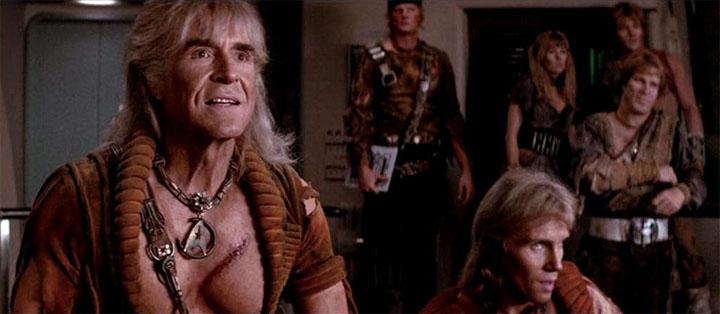
     Near the end of the filming of Star Trek II: The Wrath of Khan, the cast and crew finally felt that they were making a good film, as opposed to the first one.  However, Spock was set to die valiantly saving the Enterprise.  The idea of a good death was how they even got Leonard Nimoy to sign on to do the film!  However, the heads of production knew another sequel would most likely be needed.  So they stuck in that scene where Spock does some Vulcan tai-chi to Bones, which knocks Bones out, and whispers in his ear "remember", before promptly going into his radiation bath to die.  Now, Leonard Nimoy was pretty certain there would be no sequel, so he let this be put in the movie.  Not so surprisingly, The Wrath of Khan, with its themes of revenge, mid-life crises, and new life... and a lot of space battles did very well at the box office in 1982 and did well with critics.  So of course, Paramount quickly tried to get another sequel underway.  But the only way Leonard Nimoy was talked into it was by someone mentioning to him that he should direct the next one.  That stuck with him, so he put it in as a stipulation for returning.  And everyone said it was a good idea... and never called him back.  Finally, he called Michael Eisner (future head of Disney, but then head of Paramount) and asked him why.  Someone had told Eisner that Nimoy hated the character of Spock so much that he wrote a book about it and put in his contract for the second movie that they had to kill him off.  It was true, he had wrote a book a few years earlier called I Am Not Spock, but the book was not about the hatred of the character.  He loved playing Spock.  The autobiography simply was saying that there was more to the person Leonard Nimoy than Spock and that he himself was not like Spock.  And of course, the death of his character was not in his contract for the second movie.  The death was simply the bait to get him to sign on.  So after explaining this to Eisner, he got the directing job for Star Trek III.

     The Search for Spock is a pretty self-explanatory film.  The plot of the movie is to get Spock's body back from the Genesis planet (undoubtedly inhabited by people who love Phil Collins or perhaps two continents at war over which era, Phil Collins or Peter Gabriel they like better) so that his Katra (which is basically Spock's living soul, now incased in Bones' brain after the whole "remember" incident) can be removed from Bones and Spock can be buried on his home planet of Vulcan, which apparently is very important to vulcans, or at least an acceptable plot point.  As the Enterprise is headed to the Genesis planet (the Enterprise was stolen from space dock, by the way, as it was to be decomissioned after the heavy damage it took in the last film and due to its age) Kirk's son David and Saavik (no longer played by Kirstie Allie) are doing scientific research on the Genesis planet on the science vessel Grissom.  The planet now has various climate zones and life-forms, and one is in Spock's coffin/photon torpedo tube!  You would think the landing of the torpedo would have spread his innards across the planet, but apparently torpedoes just sort of set down on planets.  Go figure.  And also while this is happening, some Klingons led by Krug (played by Christopher Lloyd of all people, and at the time he was known for his comedic role in Taxi) have stolen the Genesis computer file and have headed to the Genesis planet as well.  Of course, this all comes together in a fiery, action-filled conclusion.


   Now, I don't feel as many do that the odd numbered Star Trek films are bad, and the even ones are good.  And one reason I deviate from that is because of this film.  Star Trek III is a good movie.  It's not as great as Star Trek II, no doubt about that, but it is a good film.  No, the problem is that films II, III, and IV form a sort of trilogy, and this is the middle part.  It's darker, the character are at their lowest, and there is no clear beginning or end.  It suffers from Two Towersitis.  And unlike The Empire Strikes Back, which is now considered by most (but not me), to be the best Star Wars film, and it being the middle of a trilogy as well, this isn't a real classic.  It's simply... good.  Let's discuss the whys now.

     Let's start with some of the bad or rather... mediocre things about the film just to get them out of the way.  The worst thing about the movie is that there's one location shot in the whole movie.  Just one.  The stuff with the different climates on the Genesis planet?  Studio stage.  I mean, most of the movie is set in space dock or on the Enterprise, so that's kind of understandable, but man those Genesis scenes are eye-sores to watch in HD these days.  Just matte paintings and styrofoam rocks.  You can tell in every shot that it's simply a soundstage.  Even the original series at least shot out in the California desert, and their budget was much less!  There's simply no excuse for the horrible production values of those scenes. 

     Second there's James Horner's score.  Whereas his score for the previous film was rousing and full of energy, his score here is more contemplative and in the background.  You barely know it's there.  And when you do notice it, it isn't rousing or that interesting.  Now, this film is less of an action/adventure film than the previous film was.  I don't really know how to classify this film, actually.  It's not really even a quest film, as the journey isn't really shown in the film.  They leave space dock and they arrive at Genesis pretty quickly.  I guess in a way the music does fit the slower pace of the film, but the score seemed uninspired.  Perhaps this is due to the fact that Leonard Nimoy wanted his friend Leonard Rosenman to do the score, but Paramount declined.  (He did end up doing the music for the next film.)

    And then there's the last negative to the film.  And it's pretty obvious.  Spock isn't really in the movie.  Sure, he shows up at the end and in other (silent) forms on Genesis, but what is Star Trek without Spock?  (This movie, apparently.)  Now, the effect is somewhat dissipated by Spock being spoken about and searched for the whole film, but it's just not the same.  Basically William Shatner and DeForest Kelley have to hold up the movie on their own with a little help from James Doohan, George Takei, and Walter Koenig.  And for the most part they do.  Personally, I find Christopher Lloyd to be the one that carries the film, though many can't take him seriously enough to do so.  Because it's obviously Christopher Lloyd in blackface.  (Oh dear, I just realized that is exactly what they did there.)  No mistaking that voice!   And to be honest, he does chew the scenery here.  He hams it up just as good as William Shatner.  I wonder if they had some sort of competition going.  Another negative that's sort of related is that Nichelle Nichols (Lt. Uhura) is only at the beginning and end of the film as well.  And that's always bugged me for some reason.  Why was she the only one of the main crew to not go rescue Spock?  (She's the one that transported them to the Enterprise and they filled up the pads, so maybe that's why, but it's a stupid reason.)

    On to the good.  The special effects are actually a bit better here than in Wrath of Khan.   ILM did the effects work again, and the film had a little bit more budget this time.  We see the first Klingon Bird of Prey in this film, and its a beauty.  (Originally it was meant to be Romulans that attack Grissom and the Enterprise, and so the ship had cloaking technology, and the ship's design was based on Romulan ships.  However, they decided Klingons were more marketable, and so they changed it to a Klingon ship, but kept it as is with the Romulan design and cloaking device.)  Even the special effects on the Genesis planet where it begins breaking apart are.. okay they aren't great, but they are serviceable.  There's falling rocks, fire, erupting trees, a big lava pit, etc.  It's cool, in a slightly better than 1970s Doctor Who effects kind of way. 

    One of my favorite additions in this film is the large amount of humor.  Without it, the movie would be a dud.  But a few years ago when I went back through the films, I found this one to actually be one of the funniest ones.  A lot of the humor comes from the campiness of Christopher Lloyd and William Shatner, sure, but there's also Bones becoming like Spock at inopportune times.  Here's one of my favorite scenes, and one of the funniest.

    I think it's also easily noticable that this scene is a big Star Wars rip off.  The alien speaks like Yoda, the scene is set in a Mos Eisley type setting, and Bones is trying to smuggle himself off a planet like Obi-Wan and Luke.  And the authorities even take an interest in his handiwork!  Then there's scenes like this...  Leading to George Takei penis jokes to this day.


    Another positive, and I'm not giving anything away here, as it was in the trailer for the movie, the destruction of the Enterprise.  It's a pretty amazing thing to behold, I only wish I'd seen it on the big screen.  Kirk blows up his own ship rather than have it end up in Klingon hands.  They even use the same destruct codes used in the only original series episode where they started the countdown to self destruct.  Good continuity, Star Trek.  It's one of the many things we love ya for!


    The acting here is pretty good as well, if you can get past the hamminess of the two top actors.  And actually Shatner gives perhaps the performance of his life when he learns of the death of someone close to him, backing up and sort of falling, missing his captain's chair.  And it gave us the great line "You Klingon bastard, you killed my son!"  It's stage-like acting for sure and melodramatic, but it works in that portion of the film.  And let us not forget the final wrestling/fist fight between Kirk and the Klingon that ordered his son's death, Krug.  The fight is great.  The planet is exploding all around them, there's a giant earthquake and a pit of fire.  In the words of Krug, "Exhilarating, isn't it?!"   The end of the scene was even referenced in South Park: Bigger, Longer, Uncut.  And it's due to the second most remembered line from the film.  "I!   Have Had!  Enough of YOU!" as Kirk continously kicks Christopher Lloyd in the face as he's hanging from a cliff.  Brilliant, that is.


The movie was made on a budget of 16 million dollars, which was about 5 million more than the second film.  However, it did gross 10 million less as well, making 87 million.  Still a pretty good hit, and enough to secure a sequel.  The film got mixed reviews at the box office, pretty much everyone agreeing that the film was good, but not great, and better than the first, but not as good as the second film.  And I agree with those criticisms.  The film basically fixes the end of the second movie so that the series can go on with Spock.  And it does that job, I suppose, while not boring us out of our minds or giving us complete jumps in logic.  (Spock himself did direct the film, after all.)  I think Siskel and Ebert's review hits all the points.  They agreed on this film and I agree with their insights completely.


Tuesday, July 22, 2014

Star Trek summer - Star Trek II: The Wrath of Khan


     After the collective 'meh' that critics and audiences felt seeing Star Trek: The Motion Picture, it wasn't a given that there would be a sequel.  Seriously, after the first one, I don't know how many people were actually asking for one.  However, we have to remember that even though it wasn't the mega-blockbuster that Paramount expected, (on the order of a Star Wars, Superman, or Close Encounters) it was actually a big hit.  It was the fifth highest grossing film of 1979.  It did better than Moonraker, better than The Muppet Movie, even better than Alien  (I blame that on Alien's R rating, however.)  The movie made $82,258,456 in the USA in 1979 dollars, which is about $259,959,850 in today's money.  On a $49 million budget.  So it was a pretty good success financially.  Some in Paramount wanted to nix the idea of a sequel.  Some wanted to fix the wrongs of the first movie and try again.  Thankfully, the second group prevailed. 

    It's sad to say, but the main reason the first film was like it was, was due to Gene Roddenberry.  He had a lot of creative control on the first film and was ready with another script for Star Trek II which had the Enterprise crew going back in time to correct earth's timeline after Klingons go back and prevent the assassination of JFK.  That's right, the Enterprise crew goes back to make sure Kennedy gets shot.  Obviously it would have made a interesting episode (in season 3), but it wouldn't make a rousing Trek film.  So Paramount 'promoted' Gene Roddenberry to Executive Consultant.  This is a trap many authors, screenwriters, and original owners get into in Hollywood.  It basically means you get to give any opinions and changes you wish to see done...  But you have no power to get them done.  They can ignore all of your requests.  And that's what Paramount did.  They shut him up by giving Roddenberry a desk where he was powerless.  Normally this would sadden me, as I love the television show.  However, Roddenberry had lost his touch.  If you need proof of that, watch the 3 TV movies he wrote in the 1970s.

    So Paramount brought in TV producer Harve Bennett, because he promised he could do a better movie than the first, and way cheaper.  However, he had never seen an episode of the TV show.  So he watched through them all in a screening room at Paramount and found that the first season episode Space Seed embodied the show well and was just itching for a sequel.  Bennett wrote a screenplay that had Khan as the enemy, but was nothing near what was filmed.  He got Star Trek fan Jack B. Sowards to redo the script, and that's when we got the main storyline of the film.   Now they needed a competent director.  A Paramount executive named Karen Moore asked her friend Nicholas Meyer, writer of the Sherlock Holmes novel The Seven-Per-Cent Solution and director of the fun Time Machine/Jack the Ripper crossover film Time After Time.  He too had never seen any Star Trek, oddly enough.  And he thought the screenplay wasn't up to snuff.  (Neither did Leonard Nimoy, who was being begged to come back.  He would only do so if he could be given a great death scene and if he approved of the script.)  So Meyer redid the script in just a few days, and with his rewrites the film was a go, and Nimoy agreed to return.


   What Meyer did, to Roddenberry's chagrin I must add, was also what made the movie be considered the best in the series by many people.  A fan of Horatio Hornblower, he turned Wrath of Khan into what is essentially a naval battle film in space.  Khan became Captain Ahab.  The shocking thing is that this actually works!  It's overblown and theatrical, especially the acting, but would we have it any other way?  I love how Khan quotes Moby Dick.  I love how Kirk quotes A Tale of Two Cities.  Quite a few of the suits as Paramount thought that Meyer had gone overboard with the nautical stuff.  The call whistles, the ranks, the emergency red alert lights giving a submarine feel to the Enterprise.  But this was 1982 when studios sometimes let directors do things the way they want.  And god bless em for it.

     I'm constantly surprised at how convincing the movie is seeing as it was filmed by a TV production crew instead of a film one, on 1/4 the budget of the first film...  Only $11.5 million.  Sure, the effects aren't as mindblowing here as Star Wars or Close Encounters, but they get the job done.  There aren't any really bad effects (besides the slug coming out of the ear).  There are more matte paintings used on this one, as you can notice in the Genesis cave.  It's a beautiful matte painting, but it's very clearly a matte painting.  
The Mutara Nebula sequence, which is in my mind one of the most rousing, exciting things put on film, essentially a submarine battle in a blinding storm, looks odd due to the budget limits, but it's so colorful and suspenseful that you don't care.  I love looking at that scene.  The nebula with it's bright swirling colors was created with latex rubber mixed with ammonia.  And the tank had color gels placed in them.  This concoction was shot at very slow speed to give it fluid slow-moving motion.   For shots of the ship moving, the Dykstracam, used on Star Wars for the same thing was used here.  The ships are never moving.  The camera moves via pre-programed computer commands past the ships against a blue-screen.  Once the stable starfield is put in, it gives the illusion that it's actually the ship that moves.

     Now a lot of people think the movie is overacted and melodramatic.  And you know what?  They would be right.  But this is Star Trek, people.  This is William Shatner, this is Ricardo Montalban.  What do you expect?  It's something a lot of us love about the show.  I mean, sure... 
 That's become an internet meme and is known by everyone.  It's the shout heard 'round the world.  (And past Ceti Alpha 5, and Krypton, and probably Tatooine too.)   But even though it's overacted.  Even though it's considered Grade A cheese, it works!  What would the movie be without that?  Still a great ride of a movie, but a bit less memorable.  And what about Montalban's barely restrained (and sometimes not restrained) psychotic revenge?  I love his chewing of the scenery.  


      And last but not least, we must speak of James Horner's brilliant score.  Now, the first  Star Trek film had a great score too.  It even was nominated for an Academy Award.  Jerry Goldsmith did that score which gave us what was to become the Next Generation score.  It was lofty and mystical and beautiful.  James Horner's score is very very different from Jerry Goldsmith's... and none of the music written for the first film is used here.  Horner did a score based on simple themes representing Kirk, Khan, Regula 1, Genesis, battle, etc.  And he put those together sort of like how John Williams would do for Star Wars.  Khan's theme is percussive using a lot of clavs and french horn.  It's almost primal.  Kirk's theme is light and adventurous.  I love the way those themes intermingle during the battle sequences.  When the Enterprise is crippled by Khan's surprise first attack, Kirk's normally happy sounding theme becomes mournful and skittish.  If you listen to the soundtrack by itself, you can know exactly what's going on at each point of the music due to the use of leitmotifs.  It's a shame this soundtrack wasn't nominated for an Academy Award, however, a lot of the music was reused by Horner for the Aliens soundtrack, which he never got to fully score like he wanted to... and that did get nominated, surprisingly.

    Star Trek II is, I would hazard to say most peoples' favorite Trek film.  And with good reason.  It's moving due to the death of Spock (not a spoiler, people, it's a well known fact) even with his resurrection on the 3rd (day?) movie. (oh.)  It asks philosophical questions with the use of a terraforming probe as a weapon.  It's a great rousing adventure with lots of space dogfights and suspense.  I could never see anyone hating this movie.  I'm sure there are some, but they are most likely philistine idiots.  It's not too long like the first film.  It's trying to entertain you, not be an exercise in intellectual mumbo-jumbo like the first film.  However, it makes good sense unlike the reboots at times.  You know where to train your eyes on the screen instead of being blinded by reflected light.   It's a rare example of a film that does just about perfectly what it sets out to do.  And for that we are eternally grateful.

And then, of course, there's this little mashup that could be made.  


Is it wrong that that actually makes me more sad than the real version in the film?

And yes, this is actually Montalban's real chest.  Kept himself in great shape, he did.


Wednesday, June 11, 2014

Star Trek summer - Star Trek: The Motion Picture


    Oh boy....  To start this series of discussions on the Star Trek films, one must start with 1979's Star Trek: The Motion Picture.  The movie has, since the time of it's release gained a reputation for being very slow, stiff, and a flop.  Some people have come to call it "The Motionless Picture".  Is it?  Well, let's take a look.

     In the mid 1970s, after Star Trek had become a hit in syndication after cancellation in 1969, Paramount decided that they had made a mistake and were going to bring a Star Trek movie to screens.  Gene Roddenberry, the show's creator and producer, wrote two scripts, both of which Paramount decided weren't possible or weren't good enough.  By 1977, Paramount decided they were going to launch a 4th television network and that a new Star Trek show would be it's flagship.  The show was to be called Star Trek Phase II, and would keep most of the cast of the original show sort of like 1973's successful Star Trek: The Animated Series did.  Spock would not have been in the show.  Leonard Nimoy had grown to dislike his association with Star Trek over the years and declined to participate.  A new Vulcan science officer would be added named Lieutenant Xon, a full Vulcan unlike Spock who was half human.  The show would also have introduced the new characters of Commander Will Decker and and Lieutenant Illia, who had had a previous close relationship.  Illia was to be a Deltan, a race that's so sexually powerful and knowledgeable that Star Fleet required them to take an oath of celibacy in order to serve.  Many of these ideas for the TV show would carry over to The Motion Picture.

     In 1978, Paramount was briefed on the pilot episode of Phase II called "In Thy Image", which was written by science fiction author Alan Dean Foster.  In the meantime Close Encounters had expanded on Star Wars' success at the box office, showing that there was a tremendous audience for science fiction films.  Paramount started looking around for science fiction scripts, and when they were told the plot of 'In Thy Image', they decided that the two hour pilot would be better suited as a movie.  They scrapped plans for the TV network and for Phase II immediately.  (Screen tests, some sets, and 13 scripts had already been done, as well as some actors being hired.)  The script for the pilot was slightly redone to make it more cinematic and Robert Wise, director of The Day The Earth Stood Still, The Haunting, The Andromeda Strain, West Side Story and The Sound of Music (very varied career) was hired to direct the new $15 million film.   They even got Nimoy to agree to be in the film.  He required script approval first, as he was still not still trying to figure out if he wanted to embrace the Spock character.  (He did not, as is commonly stated, hate the character or the show.  He simply wanted to try other things and kept getting pulled back to Star Trek.) 

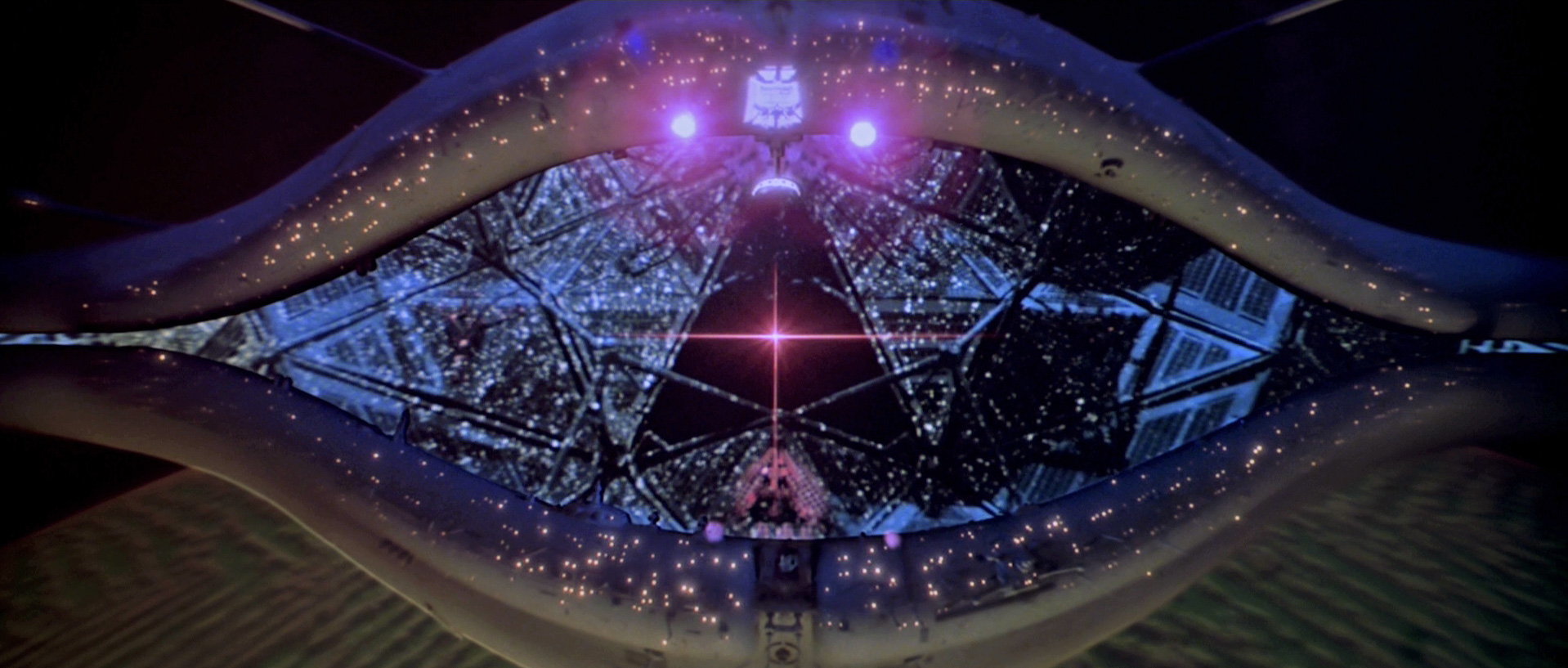
    The plot here is pretty simple Trek.  There is a huge cloud moving towards the earth that is dissolving everything in it's path.  The film starts with three Klingon ships being... erased.  Of course, the first line of defense for earth is the intrepid starship Enterprise, the good ole NCC-1701.  However, Kirk hasn't been the captain of the ship for years.  The current captain is William Decker (who would be the inspiration for the similarly named and personified William Riker in The Next Generation) who is one of the most boring main characters in the Trek films.  He has the personality of a load of bricks.  However, I think Stephen Collins (7th Heaven) did what he could with the limiting role.  Kirk, now an admiral, is having somewhat of a mid-life crisis and has decided that commanding the Enterprise again is the answer to his malaise.  So he pressures Starfleet into letting him take command of this mission.  Decker is not pleased, however, the rest of the crew seems to be. (Not sure all of them were about Shatner though.)  Kirk is not used to the Enterprise now, which has been renovated, and he constantly clashes with Decker, who does know the ship.  Joining the crew as navigator is Illia, who had a relationship with Decker before she was in Starfleet.  Kirk also convinces Dr. McCoy to come back.  (In the novelization we learn he's been a veterinarian since leaving the Enterprise, growing tired of human patients.)  Meanwhile Spock has been taking the ritual to cleanse himself of all human emotion on his home planet of Vulcan.  However, just as he's about to finish the ritual, he senses the conciousness of the cloud and fails.  He sets out to join the Enterprise en route.  When he arrives, everyone is very happy to see him, but he's completely emotionless to everyone, quickly trying to leave the bridge to resolve the ship's warp drive problems.  (It had entered a wormhole and was on a collision course with an asteroid earlier.)  Kirk and McCoy find out what's wrong with Spock, but can not help.  However, as the crew studies the cloud and Illea is taken by it's probe, Spock gets intrigued and changes as the film goes on back to his normal self.  (V'Ger represents perfect logic, which is what Spock was trying to achieve but could not.)  V'Ger (the cloud's name) sends back Illea's form to Enterprise as a probe to study the "earth units" (Crew) and to try to get in contact with it's creator.  Oh, and V'Ger is basically a giant space vagina, so apt name (which Illea pronounces as V'Gah)...  See?


     The plot actually has quite a bit in common with a Star Trek episode called "The Changeling", which is one of my least favorite Star Trek episodes.  In that episode a space probe called Nomad is brought aboard the Enterprise and eventually decides that the crew is infesting the ship and are unnecessary as with modifications the ship can run itself and decides to kill them.  Well, by the end of the film, V'Ger had decided the same thing about the people of earth and the Enterprise.  Why did it have to be like that episode?  It's one of the most joked about episodes in Trekdom... and it's a very boring bottle episode (an episode where we don't leave the ship).


    I love that teaser trailer.  Narrated by Orson Welles, basically just naming the cast and characters against shots of the ship...  and then the out of place THX type sound at the end.  One interesting thing about this trailer is it's use of lasers at the end.  Interesting because unlike Star Wars, which used lots of blue screen and model work for most of it's effects shots, this film used a lot of laser and light effects to create it's illusions.  Sure, it used blue screen and model work as well, but the effects here were done by different people than those that did Star Wars. Well, actually, John Dykstra did work on this film's special effects eventually.  But first Paramount had hired a company called Robert Abel and Associates to do the special effects.  They had done the effects for Robert Wise's 1971 film The Andromeda Strain, but that was not exactly a huge special effects film, despite being science fiction.  After a year of work on the effects for Star Trek, no useable footage was rendered.  Paramount got Douglas Trumbull to take over special effects work, as he was now available having finished his work on Close Encounters of the Third Kind.  Not able to do all the work himself and needing more people to get the film done in time, Trumbull was joined by John Dykstra's special effects crew.  Dykstra had been fired from Lucas' ILM by Lucas himself due to disagreement on effects quality and speed of effects work.  (Dykstra and his team still won an Academy Award for their work.)  Trumbull was told that he could spend as much money as it took to get the film ready by December, which was 9 months away, just as long as it got done.  And he did.  Dykstra and his team did all the work on the ships while Trumbull worked on the V'Ger cloud effects.  And the effects in the movie are actually quite good.  They have more of a 2001: A Space Odyssey vibe (Trumbull did the effects for that film) than a Star Wars vibe.  The effects are pretty old school, but they actually work better than the blue screen effects in the film.  I'm amazed that so many light tricks were used in the film.  The transporter effects in the film are made from laser light refracted by broken fancy glass ashtrays.  The wormhole is not animated as I had thought, but is an actual laser effect. Sadly, the wormhole scene is one of the most unintentionally hilarious scenes in the film, as everyone speaks in slow voices and are blurred.  Especially funny is Chekov speaking deep and slow.


   And that's one of the problems with the film.  It's just... stiff.  And I know that's a decision made on purpose, but it just makes the movie feel sooooo long.  The crew is supposed to have been apart for a while and Kirk is having a mid-life crisis.  Spock is having one too, deciding to get rid of his humanity to behave as a full Vulcan.  That's why Kirk is so military and why Spock is so distant and emotionless.  They do thaw out as the film goes on, but that doesn't start until Spock comes into the film around the one hour mark.  The television show was always part comedy, intentionally and unintentionally at times.  For Star Trek: The Motion Picture, it's mainly unintentional.  Dr. McCoy has the usual sarcastic wit to him, but Kirk doesn't.   In one of my favorite lines, after Spock states that V'Ger is like a spoiled child, McCoy wonders if they should spank it. 

Let's talk about some of the other issues the film has, shall we?  How about those jump suit costumes?  I know this is the disco era, but man was that a bad decision.  Gone are the blue, gold and red uniforms in favor of grey... pajamas.  And Shatner has his most obvious toupee in this film.  Watch it in blu-ray and be amazed.  To add to that, the crew other than Decker, Kirk, Illea, and Spock all get just a few lines.  I mean, sure, this happened on the show too, but in comparison with the later films in this series, it's kind of sad.  The film is also quite a bit too long.  Much as has been said about how long the special effects shots last, especially the reveal of the Enterprise.  Well, part of that is due to the fact that they had no time to edit those shots as they were being done up to the last day before the premier.  And they actually wanted those scenes to last a while.  They figured the diehard fans of the original show would be in awe of their favorite ship so detailed and in scale on the big screen.  Let's face it, the movie was sold as a special effects film.  Paramount was giving people what they thought the people wanted after the big sci-fi films of 1977.  But it doesn't work.  The long effects shots seem to be there to add to running time.  Even the critics back in 1979 agreed with that assessment.  In fact, I think the only thing the movie gets 100% right is Jerry Goldsmith's iconic score.  He created a theme that is more popular than Alexander Courage's theme to the original series.  His theme would eventually be adapted as the theme to The Next Generation.  It's not a John Williams type score, but more experimental and mysterious.  It's not giddy adventure music outside of the theme.  The score was one of the three Academy Awards the film was nominated for.  (It won none.)

     The film, which went way overbudget to $46 million, went on to make $139 million.  That's $446.9 million worldwide adjusted for inflation.  That'd be quite a tidy sum even today, but it didn't meet Paramount's expectations, as they were hoping for another Star Wars.  The critics were divided on the film.  Most thought it slow, boring, and that the actors didn't have their hearts in it.  I have to agree.  The film is a struggle to sit through (I did it 3 times in the past 3 days, I should know.) and pales in comparison to every single Trek movie that comes after it.  This movie is basically a fancy two hour TV episode that should have only been an hour.  It's got it's moments and the effects are pretty cool, but if you want to put anyone to sleep, this is a good film to show them.  Out of the two big sci-fi films (Alien is horror, not sci-fi, and Moonraker is too silly for me even to consider) of 1979, (both of which were the last to have overtures before the movie began, by the way), stick with the cartoonish but dark The Black Hole.  At least it's fun, even if it isn't as smart and is more clearly trying to ride on Star Wars' popularity.  At least The Motion Picture did well enough to warrant a sequel... But they wouldn't spend as much money on it.  And by jove, maybe they finally found a good formula!


Take us out!
  

Monday, May 26, 2014

Many Days of Friday the 13th - Friday the 13th (2009)

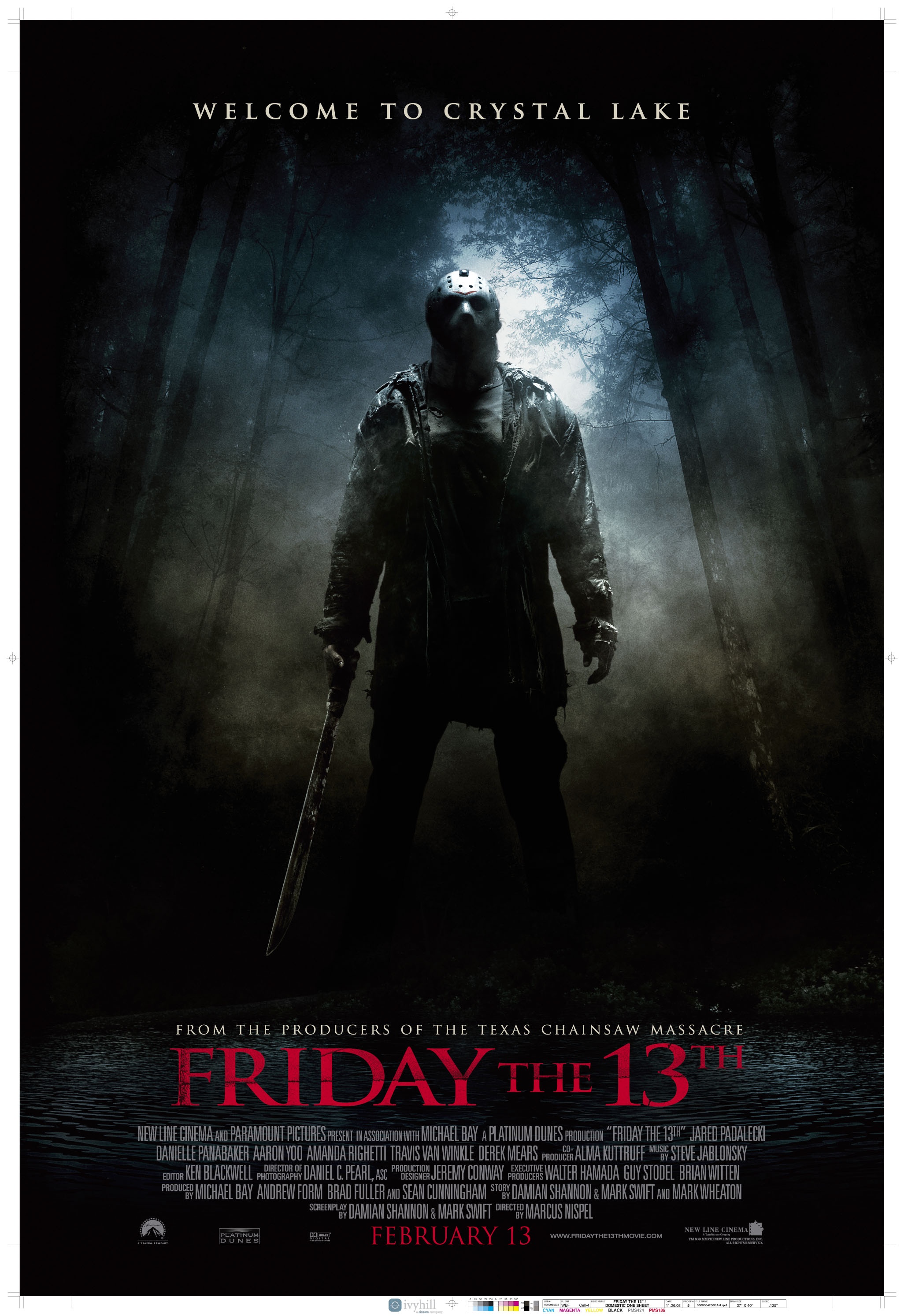
Friday the 13th (2009)


    So here we are at the latest Friday the 13th film, which is already 5 years old.  After it came out, there was quick talk of a sequel after its great recordbreaking first weekend.  However, it had one of the sharpest declines by the second weekend.  In fact, the box office fell by a surprising 80.4%!  That's the 7th biggest drop of a film to open at #1 at the box office... ever.  So what was it?  Was it negative reviews?  Bad word of mouth?  Did something huge open the next weekend?  Let's take a look.


     For some reason, after the success of 2003's Freddy Vs. Jason, there was no movement on another film in either one of the series.  By 2009, Michael Bay's company Platinum Dunes had decided to reimagine the Friday series after having success rebooting the Texas Chainsaw Massacre series, The Amityville Horror, and The Hitcher.  There was actually a good deal of excitement in this announcement.  Unlike other things Michael Bay touches, the remakes weren't all that bad.  I genuinely liked his company's remakes at that point.  So I was kind of excited that he was taking a a series that had devolved into self parody and that no one really cared about anymore and put a crew together to make something of it.  

    The movie starts off with a running start... literally.  It begins as the end of the original 1980 Friday the 13th did, this time with new actors and filmed in artsy black and white.  Everyone knows what happened in the first film, so I'll just say that Mrs. Voorhees meets her demise at the hands of a young female camp councillor.  Then we fast forward to present day where some dipshit 20somethings are looking for some wild growing weed to get rich.  The GPS screws up and they end up camping in the woods for the night.  Obviously with the franchise this is in, it doesn't turn out well.  There's some sex, crude remarks, pissing in the woods, and hey!  One of the guys finds the weed!  But crap, Jason doesn't like his weed touched, so the guy gets bashed to death.  And Jason isn't having this weed stealing.  He'd been quiet all alone in the woods until some stupid college aged idiots come and start to steal his mellow down medicine.  And he doesn't approve!  So he kills the rest of them one by one in increasingly painful ways.  One guy gets his leg caught in a bear trap, and then a few minutes later gets the ol' machete to the face!  Oh it's good to have Jason back...

    Fast forward a few months and a group of college students are taking a vacation at spoiled rich asshole Trent's upscale cabin in the woods.  (No relation to this Trent.  Oddly enough, the same actor played another asshole named Trent in Michael Bay's Transformers.  I like to think it's the same character.)  Meanwhile Jared Padalecki is looking for his missing sister (one of the kids looking for the weed).  The cops don't like him doing so, making the people in the area feel unsafe, etc. or something like that.  Besides Jared Padalecki, the only interesting character in this film in Chewie, the asian-american weed addict.  He's just so likeable, which is an odd thing  for this series.  I guess Arlen Escarpeta, Chewie's best friend, is alright as well.  He's funny too, but are any of these peripheral characters here for anything more than to be knocked off?  Absolutely not.  This is Friday the 13th we're talking about here!  We want things this way!  Below is a picture of the main cast of the film.


    One thing about this particular installment in the series that I do like is that for the first time since the early 1980s, Jason runs!  It brings a bit more menace to the film that the later installments in the series didn't have.  There's one big difference between this film and the first three films in the series, however.  Like Part IV and Part VII, these are not camp councilors as the main characters.  They are simply partying teens out for a week in a cabin by Crystal Lake.  Sadly, I like the camp councilor stories better.  They just have a different vibe to them than the other entries do.  Something else odd the writers did was to give Jason a secret underground lair beneath the old camp and surrounding area.  I'm wondering how it got there, as it seems to connect all the cabins and various other places.  Did Jason just spend 30 years digging it all?  Did he hire the Amish to help?  Does the camp just have very overactive moles?  While it doesn't make much sense, it is odd and different.  And another good point of the film is that aside from 1 or 2 characters, we don't actively want these people to die.  I mean, they may be a little annoying at times, but they aren't all sleazeballs.  And of course, there's my favorite aspect to the film.  The fact that within the first 40 minutes, we basically have the end of the first film, then we have Jason in his second film burlap sack mask, and then a bit later we have Jason get his iconic hockey mask.  I wish he'd have kept the burlap sack for longer, though.  You all know it's my favorite.

    Now for some negatives.  I guess it's not really a negative, but a positive for some people, but there is tons of nudity here.  Like some of the most I've seen in a horror film, and definitely the most in this particular series.  There's lots of boobs, rear nudity, and even some full frontal... and a very graphic sex scene.  And for the ladies... two shirtless guys.  (Woohoo?)  However, for those looking for inventive kills... Look elsewhere.  Like the first few films in the series, this goes back to basics.  No powertools, no punching someone's head off, no tossing someone on a huge corkscrew or killing people in virtual reality.  Instead we get arrows in the head, bear traps, machete kills.... Basically people just getting killed with sharp objects.  I think the most inventive kill was just setting someone on fire, actually.  I don't find these deaths to be negatives, but I know some would get bored by them.  To me, these are more realistic and are potentially frightening a little bit.  When I see someone's head get punched off or someone have their heart punched through their chest, I laugh.  When I see someone have a metal pole pushed through their throat or a leg get snapped in a bear trap, I cringe and think "Oooh, that's gotta be painful."   And just for fun, here's the obnoxious character's epic death scene, including his girly scream.


      Even though it's not the best regarded film in the series, I do like this film quite a bit.  It has no huge negatives when considered in relation to the other films in the series.  Even the acting isn't really bad.  It's not the best, but at least they have some trained actors here.  And the film does get down to business pretty quickly and doesn't let up that much.  Remember how the first few films took their time to get to the killings thinking it made things suspenseful even though it really didn't?  Yeah, they know it doesn't work here, so they just decrease the time between killings every so often.  I've often wondered why the movie hasn't gotten the sequel that was announced right after the film came out in theaters.  These films aren't expensive to make and there is an audience for these.  From what I read, it seems the downward economy that started right about the time this movie came out put the sequel on indefinite hold.   However, last year Warner Bros sold their ownership of Friday the 13th back to Paramount so that they could co-produce Chris Nolan's Interstellar.    And apparently now Paramount is working very hard to make the sequel a reality.    There is also a new TV series apparently in the works, though I'm not sure if it's been greenlit or if it's just a pilot that we'll have to wait and see if it gets picked up.   The new film is apparently set to debut next year, 2015.  I hope they don't go the found footage route which I've read they are considering.

     Well, that's it (for now) for the Friday the 13th series, folks.  I intend to start my series of write-ups on the Nightmare on Elm Street and Star Trek film series very soon.  I hope you've all enjoyed this as much as I liked writing them.  


Saturday, May 17, 2014

Godzilla (2014) review


      Now, let's get this out of the way first.  I'm a Godzilla fan-boy.  I own all the movies, even the bad ones.  I even own the 1998 Godzilla.  I don't like it that much, but I do own it.  I've been looking forward to this movie since the first trailer came out last year.  You would think that being a fan-boy of the Toho movies, that I would be against this movie, since it's an all CG Godzilla, not set in Japan, not done by Toho, etc.  Well, sorry, but when it comes to Godzilla, as long as the movie is interesting and has a lot of destruction in it, it's a good Godzilla film.  And today I've learned that there's a very vocal minority that completely hated the movie.  I honestly do not understand those people.  They either don't understand Godzilla or were expecting something akin to Independence Day.  I would caution those people that they'd be better off watching the 1998 version of the movie... and that therefore they should probably butt out of the conversation, and should be laughed off the internet for liking that movie better.

    So the movie is about this bomb defusing Navy guy played by Aaron Taylor-Johnson (Kick-Ass, Kick-Ass 2) who, 15 years earlier was son of a scientist (Bryan Cranston) who worked at a nuclear power plant in Japan.  His mother (Juliette Binoche) worked there too.  Well, there was a disaster there that the Japanese government has labeled as a nuclear accident.  Since then, his dad has been trying to get evidence that the incident was not a nuclear one, and was instead caused by something living.  Before the incident, there were seismographical readings that were patterned instead of random, which could not be caused by an earthquake and wasn't coming from the plant itself.  Aaron Taylor-Johnson's character ends up having to go to Japan in the present day to bail his dad out of jail after he trespassed on the supposedly radiated property they used to live on near the plant.  After that, things go to shit.  Ken Watanbe plays doctor Serizawa, who is a scientist who knows more that he lets on at first.  Elizabeth Olsen plays Aaron Taylor-Johnson's wife, who is a nurse in San Francisco, where they live in the film.  It's hard to write this without giving too many plot points away.  Let's just say that there are more monsters in the film than Godzilla himself, and they do tend to get more screen time than he does.  Also, the main characters are not well fleshed out.  I felt more for Ken Watanabe than I did Aaron Taylor-Johnson.  Heck, I felt more for the other monsters in the film than I did him.   But see, unlike the film's detractors, I went in not caring about the human characters.  In Godzilla films they never matter that much anyway.

     Now I know that many will consider myself an impartial reviewer for saying such things, and they would be right.  If you look at it as just a big disaster film that's supposed to wow you with CGI, it's merely a good movie.  If you go in wanting human drama and character development, you're going to hate it.  If you go to see it wanting destruction, an easy to follow plot, cool cinematography, and a technically well made film, you'll probably love it, as the latter is what I wanted.  There's been a lot of talk about Godzilla himself being in only 20 minutes of the film.  Well, I wouldn't say that's true.  He may be on-screen for 20 minutes, but as in Jaws and Alien, there's a build up here.  You see the other monster about 30 minutes in.  This monster, the MUTO or whatever they call it, is the star monster here.  That's the way actually a lot of Godzilla films are.  The other monster terrorizes the city or whatever, and Godzilla comes in late in the film to destroy it.  I know a lot of people have actually never seen a Godzilla film though, so I can't hold their disappointment at this against them.  I just know what to expect, and they didn't. 


    The cinematography here is great.  I loved the way that the camera was always at human level.  You saw things as the people would.  You don't have fancy crane moves.  You don't see Godzilla at face height unless there's a person at face height of Godzilla in that situation.  (Like the halo dive.)  It gives a more "you're there" feel to the film, but it's not shaky cam, thank goodness.  I'd compare the way it was filmed to Jaws, where you are at water level in the scenes where people are in the water, not 5 feet above it.  And the music to this was great too.  Alexandrè Desplat's score is one of the best I've heard for a while.  There's a primal sense there that goes great with the force of nature theme in the movie.  It's a dark score, but adventuresome as well.  I'll definitely be getting the soundtrack.

     All in all, it's the best monster movie I've seen in a long while.  I'd put it on par with Jurassic Park in terms of monster movies.  (I know it's a stretch calling it that, but T Rex is king of the lizards, and Godzilla is king of the monsters.)  The acting in the film is pretty good, but the characterizations are pretty meh.  I don't even remember the names of the characters, but that doesn't bother me here.  At least I didn't actively want them to die like the ones in the 1998 version.  I think I'll go see this in theaters another time or two before it leaves.  I liked it that much.  It's set to make almost $100 million this weekend, which will make it a hit.  It was shot for $160 million, which is only $30 million more than the 1998 version cost, and that's without inflation.  So it should make up it's money by the end of next weekend just in American box office.  Please folks, if you want some fun, go see this.  If you want a brooding character study, go watch The Dark Knight again.  You should know what you're going to get with a Godzilla film.


6 1/2 out of 7 stars.   Must see.


Thursday, May 15, 2014

5 Weirdest Godzilla Moments and 5 Favorite Godzilla Films


     As posited when I did the top films that influenced who I am, I am a huge Godzilla fan.  It started when I saw my first Godzilla film when I was about 9 years old.  That film was Godzilla Vs. The Sea Monster, a 1966 film that isn't considered one of the best.  And I don't count it as one of my favorites either.  It's near the middle of the 28 Toho Godzilla films in that regard.  Yes, not counting the new Legendary Pictures version or the quite horrible Roland Emmerich film from 1998, there are 28 Godzilla films.  The first one came out in 1954 in Japan as a nuclear fable.  Having been the only country to have an atomic bomb dropped on it (2 actually), they knew first-hand the effects of nuclear war.  And Godzilla was supposed to be a personification of those effects with the destruction he caused by trampling through the cities and laying waste with his nuclear breath.  The first film was a dark one, and it did so well in Japan that an American company bought up the rights and re-edited the film, inserting Perry Mason himself, Raymond Burr, as a foreign correspondent in Tokyo as Godzilla attacks.  The film was retitled, Godzilla, King of The Monsters, and is actually a great movie in it's own right, yet not as dark and very different from the Japanese original.  The original Japanese film was quickly followed up with a hastily made, inferior sequel called Godzilla Raids Again in 1955.  Despite it's strong sales, it was not well received critically, and when sold to America, they tried to market Godzilla as a different monster called Gigantis, and the film flopped.  Godzilla would not appear in another movie until 1962, when he met up with King Kong...  That movie, and it's American redub (which is the only way you can see the movie in America, unlike the other Godzilla films), did so well that Godzilla would appear in a movie almost every year from 1964's Godzilla Vs. Mothra until 1975's Terror of Mechagodzilla.  The only year in between those without a Godzilla film was 1970, when the Japanese studio system started to collapse.

     Due to the success of American Saturday matinees on TV and all-day marathons of Japanese monster films in movie theaters Godzilla remained popular even after the films stopped being made both here and in Japan.  In 1984, Toho decided that Godzilla might be profitable again.  (The 1970s had been a time of declining ticket sales for Godzilla films... and lower budgets.)  1984 saw the release of Return of Godzilla, which was a dead serious take on Godzilla, akin to the 1954 original, but with some sci-fi action added.  It's a pretty great Godzilla film and did well in Japan.  It was re-edited and released in America in 1985 as Godzilla 1985.  Raymond Burr, star of the American re-edit of the original Godzilla, was again called back to reprise his character.  New scenes were added, some scenes were deleted, and a scene where a Russian submarine tries to stop a nuclear launch was redone so it looks like they tried to actually launch the weapon.  The film didn't do well critically or in theaters here.  However, this new series continued in Japan until 1995!  It's referred to as the Hesei series by Godzilla fans, referring to who reigned in Japan while the bulk of the series was produced.  The original 1954-1975 series is referred to as the Showa series.  Godzilla was actually killed off in 1995 to great media attention. 

    In 1998, the American Godzilla came out to a critical drubbing around the world.  It didn't feel like a Godzilla film, it didn't look like Godzilla, and those that are fans of Godzilla call it GINO (Godzilla In Name Only).  And the movie is actually not that great.  The story sucks.  But it has some cool destruction scenes, I'll give it that.  Due to the film, Toho decided to make a new Godzilla series to rinse the bad taste left in peoples' mouths from the American film.  This new series is called the Millennium series, as it started with Godzilla 2000, which was also released in American theaters.  (I know, as I was one of the few who went to see it.)  It was again re-edited and dubbed, but not to the large extent of the last two times.  The new dubbing made the film a bit less serious, and the film was re-edited to move things along quicker.  In fact, most prefer the American edit to the Japanese one.  5 films followed after that one, and since 2004, there has not been a Godzilla film.

5 Weirdest Godzilla Moments

1.  Okay, so this is the only one here that I couldn't find a film clip for.  In the 1964 film Ghidorah, the Three-Headed Monster, Mothra's fairy companions, who are only a foot tall, translate the attempt by Mothra, here in larva form, to convince Godzilla and Rodan to join up with it to fight the new menace, Ghidorah.  So we get to hear translated Godzilla and Rodan being sad that the humans don't understand them, and Godzilla appearing to curse at Mothra resulting in the little fairies saying "Oh Godzilla, what bad language!".  Maybe you have to be there to consider this weird, but I always have.  Up until this film, the 5th Godzilla film, the series was considered serious, but it was this film as well that turned Godzilla into a good guy, so...

2.   Godzilla plays volleyball with a giant lobster.  This is from Godzilla vs. The Sea Monster and it may seem out of character for Godzilla, but there's a reason for that.  The movie was originally going to be a King Kong film.  However, at the last minute, they decided Godzilla was a better choice.  So all throughout the film Godzilla does Kong-like things.  I think he even beats his chest a few times, and he's woken up by lightning, which in the Japanese films, gives Kong his power.
<iframe width="420" height="315" src="//www.youtube.com/embed/cMKrtWhQcoc" frameborder="0" allowfullscreen></iframe>

3.  Godzilla and Angillas, um... talk to each other.  And I mean, it's translated into English in the American version...  This happens in 1972's Godzilla Vs. Gigan.  In it, a tape that only monsters can understand is played like hundreds of miles away, but somehow Godzilla hears it all the way on Monster Island.  And he proceeds to speak in English to Angillas, and Angillas speaks back...  No, that isn't odd at all....  In the Japanese version, the monsters sound like records scratching and have Japanese speech bubbles to translate what they are saying to each other.  That makes a LITTLE more sense, right?  Right?  Here's a rip that shows both the speech bubbles and the English dub.


4.  Godzilla's victory dance.  Okay, this one is from Invasion of the Astro-Monster from 1965.  Aliens bring Godzilla and Rodan from earth to their planet to fight Monster Zero, who just happens to be King Ghidorah.  So they fight him and seemingly win, after which, Godzilla does a little dance that was popular in Japan at the time.  This moment in one of the more serious films of the series....


5.   And I saved the best for last.  In 1971's Godzilla vs. Hedorah (also known as Godzilla Vs. The Smog Monster), Godzilla fights a big pile of sludge brought about from humanity's trash.  (I shit you not.  The Japanese love to talk about environmental stuff.)  And believe it or not, that's not the most WTF part of the film.  No, there's also little animated sections for some reason...  And comical music... and people get eaten away by toxic gas.  And most of all... Godzilla suddenly learns how to fly.  Yes, Godzilla can now, for one movie, fly.  And if that weren't intriguing enough, he flies... backwards.... propelled by his own radioactive breath.  Yes, folks, this is something you have to see to believe.


And here's something I couldn't leave out either...  In 1973's Godzilla Vs. Megalon, Godzilla performs the world's longest jump-kick.  Forever enshrined during the opening of a few seasons of MST3K too!


Top 5 Favorite Godzilla Films

1.   Son of Godzilla (1966)

     This was the first Godzilla film to not have any city-trampling.  This one is set almost completely on a far-off island where scientists are doing weather experiments.  This was my dad's favorite Godzilla film, as it includes Minya, commonly believed to be Godzilla's son.  Throughout the film, Godzilla teaches Minya to breath radioactive breath (Minya manages smoke rings instead) and fights giant praying mantises called Kamakaras or Gimantis and a giant spider called Kumonga in the Japanese version and Spiga in the English version.  It's definitely not one of the more serious Godzilla films, but it's not the silliest either.  It sports an odd musical score, and is the first Godzilla film helmed by the director of many of the later Showa pictures, Jun Fukuda.  It's quite entertaining, and the second Godzilla film I ever saw.  And for once, the characters are somewhat interesting too.

2.  Godzilla 1985 (1985)
     Another one of the first Godzilla films I saw, and the only one never to be released even on DVD here in America.  There's been some rights issues with the film since the mid-1990s that have yet to be resolved.  At any rate, it's a very serious film.  Godzilla looks truly menacing here, and the city destruction is some of the best out of Godzilla history.  For the first time in decades, you actually see Godzilla stomp on people....  You see him pick up a train with people in it and then throw it back down.  And Godzilla has fangs!  And looks pissed off.  For once, Godzilla is kinda scary for the first time since 1954.  If you can find it, check it out.

3.  Godzilla, Mothra, and King Ghidorah:Giant Monsters All Out Attack! (2001)

     This movie was concieved and directed by the guy who directed the kick-ass Gamera films of the 1990s, which were often considered darker and better than the Godzilla movies produced at the time.  In this film, Godzilla is a bad guy, as he was through all of the Millennium series.  But also King Ghidorah for the first time in history, is a good guy... and he's shorter than Godzilla!  The movie also brings back fan favorites Mothra and Baragon.  Godzilla looks more reptilian here than ever before.  In fact, Godzilla was originally meant to walk on all fours in this film, but that wasn't to be.  He also has stark white eyes with no pupils... Yet again, if you want to see Godzilla as an evil bad-ass, here's one of the films to see.  It's actually got some pretty good special effects too!


4.  Godzilla Vs. Gigan (1972)

     Ok, so this one is either loved or hated by Godzilla fans.  It does have quite a bit of stock footage from earlier Godzilla films stuck in there which kind of stick out, but it's not as much as some claim.  However, it also introduced a monster Godzilla fans really like in Gigan.  And the end monster battle lasts about 30 minutes in a Godzilla amusement park!  The plot has to deal with these people building an amusement park to bring forth world peace.  (Yeah, I don't get it either.)  But their intentions are really to destroy all of earth's monsters and reform the world to suit their needs as their world has been polluted to the point of destruction!  But who cares, right?  We're here to see men in rubber suits beat the crap out of each other and destroy scale models, am I right?  Well, there's a lot of that in this film too.  Even though the Godzilla suit used here is obviously falling apart.  You can see bits of rubber fling off during the fight!  And the King Ghidorah suit was in such bad shape that during most of the fights, stock footage had to be used, as evident from it going from day to night and back quite a few times during the fights/destruction scenes.

5.  Ghidorah, the Three-Headed Monster (1964)

     Why is this so good?  Well, it's the first time in the series that more than two monsters fight each other, that's why.... and it was still sort of serious despite the talk between the monsters I explained earlier.  And it's got enough city destruction to please most anyone.  It's directed by the guy who did the original Godzilla film, and in fact, quite a few of the Showa series films, Ishiro Honda.  So it's got some quality to it, even if it is just a monster free-for-all.  I'm still unsure of the plot... so.... yeah....
\
Be sure to watch the new American Godzilla film.  It's gotten good reviews and looks great.


Thursday, April 17, 2014

Top 15 Wooden Coasters I've Ridden - Part 2

Top 15 Wooden Coasters I've Ridden - Part 2


7.  American Thunder at Six Flags St. Louis (Eureka, MO) - near St. Louis

     When this coaster opened in 2008, it was called Evel Knievel and the namesake's family was there to open the coaster.  His son Robbie Knievel jumped 25 Dodge Chargers on his motorcycle in the park's parking lot to commemorate the event.  After 3 years, and after people started to recognize the domestic abuse that Evel did upon his family in the 1970s and Six Flags trying to get out of bankruptcy by getting rid of their expensive licensing agreements, Six Flags changed the name to American Thunder.  The coaster sits in a compact spot once home to the park's old kids area, which was moved, and the car ride, which was shortened and still runs under part of the coaster.  The ride isn't very tall at only 82 feet with a drop of 80 feet.  It isn't even that fast, only going 48 MPH.  However, the layout is designed so that the speed never really gets cut.  The hills are designed to get smaller and smaller, the turns sharper and sharper, as the ride goes on.  It creates an out-of-control hyperactive feel.  Unlike most wooden coasters where sitting in the back is preferred, I actually liked the front on this one for airtime.  And with the comfy Millennium Flyer trains, it's not at all rough either.  Unlike the other two wooden coasters at the park, this is not in the forest.


6.  Thunderhead at Dollywood (Pigeon Forge, TN)

     This one is celebrating it's 10th birthday this year.  It opened in 2004 and was designed by Great Coasters International, who did a lot of coasters on this list including American Thunder.  Unlike that coaster, this one is a twister coaster instead of a triple out and back.  It criss-crosses under and over itself  32 times.  It was also the first coaster with a station fly-through, which means part of the track goes through the station at high speed while another train is loading.
This coaster also uses the Millennium Flyer trains that most CGI coasters do, ensuring a comfortable ride.  Since the coaster opened, it has been in the top 10 of the Golden Ticket Awards for Best Wooden Coaster, being #1 in 2005 and 2006.  Unlike most of Dollywood's coasters, this one isn't greatly themed, but it doesn't distract from the ride, fortunately.  The top speed is 55 MPH and it's 100 feet tall with a drop of the same height.  At over 3,000 feet long, it gives a nice long ride as well.  It's also sort of a terrain coaster, as it uses the park's mountainous topography to fool you with high hills with short drops and short hills with big drops.


5.  Voyage at Holiday World (Santa Claus, IN) - Middle of nowhere, IN

     This one's pretty much the big daddy of them all when it comes to wooden coasters these days.  It has 24.3 seconds of airtime throughout it's course, which is more than any other wooden coaster.  It has 5 underground tunnels... again, the most on any wooden coaster.  It's the second longest, third fastest, fourth highest, and has the 5th biggest drop and 5th steepest drop on any wooden coaster as well.  It won Top Wooden Coaster at the Golden Ticket Awards for 5 years (it opened in 2006), and has never been out of the top 5.  It's the first coaster The Gravity Group ever designed.  The coaster is so extreme that they've had to retrack the whole ride once, and do portions of it several times because of the way the trains tear up the track.  It's 163 feet tall with a 154 foot first drop at a 66 degree angle.  It goes 67.4 MPH, which is faster than most steel coasters, and the coaster is almost 6,500 feet long.  It's a hell of a lot of fun, however some enthusiasts feel the coaster is too rough now.  (I didn't think so, but I think they're wimps about such things.)  The coaster is in the park's Thanksgiving section, and it was the anchor of that area when it opened in 2006.  The ride goes out into the forest and back and is themed to the voyage of the Mayflower.  Oh, and it's got steel supports, but a wooden track, which was all the rage in the early to mid-2000s.


4.  Legend at Holiday World (Santa Claus, IN)

     Well, this is the last of the three adult coasters at Holiday World, but the middle one built.  It opened in 2000 and like The Raven is located in the park's Halloween section.  It's usually enthusiasts' least favorite of the park's coasters due to perceived roughness (give me a break), but is still considered world class.  It's 4,042 foot long path takes it through the woods and over towards Splashin' Safari, the park's world class water park, which I highly recommend.  (They'll even let you wear shoes, jeans, and shirt on their slides!)  The Sleepy Hollow themed ride with it's schoolhouse shaped station reaches speeds of 59 MPH and a height of 99 feet.  However, due to terrain, the highest drop is 113 feet.  The coaster was designed by the now-defunct Custom Coasters International (or CCI).  It's been in the top 20 Best Wooden Coasters since it opened.  I love it's use of forest and terrain as it's supposed to feel like you're Ichobad Crane and the headless horseman is chasing you.


3.  Ravine Flyer II at Waldameer Park (Erie, PA)

      This coaster is situated in a small park next to Lake Erie in the small city of Erie, PA.  This coaster is also a newer coaster, having opened in 2008 after about 15 years of trying to get it built.  The park had to fight the RV/Campground place next door, get permission for the coaster to go over a state road, and had to change design companies after CCI, who originally designed the coaster in the mid-1990s went out of business.  Finally the coaster was built with a steel support system and wooden track and a final design by The Gravity Group; the same company that did Voyage.   The coaster is almost 3,000 feet long with a 85 foot lift hill and a 120 foot first drop at 60 degrees.  (Terrain!)  It also goes 60 MPH.  It's a short, fast, and extremely fun little coaster.  It won Best New Ride at the Golden Ticket Awards the year it opened.  Believe it or not, with all the wooden coasters that Pennsylvania has, this one has the biggest drop.  I strongly recommend a ride on this hidden beauty, (especially at sunset, because it's right on Lake Erie) and a trip to this wonderful small park.  (Which has one of the fastest Musik Express rides in the world!  And it goes backwards unlike a lot of them do now.)


2.   The Phoenix at Knoebels (Elysburg, PA) - middle of friggin' nowhere... about an hour from Harrisburg

     This coaster is something of a legend among coaster enthusiasts.  It opened in 1947 at Playland Park in San Antonio, Texas as The Rocket.  When it opened it was considered the largest coaster in the world with it's 78 foot tall lift hill and it's 3,200 feet of track.  The park closed in 1980 and the coaster stood but did not operate for four years.  In 1984, Knoebels bought the ride, numbered each board in order to put it back together correctly as they had no blueprints, and moved the coaster piece by piece to Pennsylvania.  It was the first relocation of a large coaster in many years and started a small effort for parks to save old coasters left to neglect.  The ride was re-opened in 1985 on June 15 (10 days before I was born!) and coaster history was re-written.  The coaster is considered one of the best on the planet due to it's strong airtime and traditional single buzzbar per seat.  There's no seat dividers like on modern coasters either.  Having one of those single-position buzz-bars, which don't staple you down to your seat like modern individual lap bars do, with the airtime this coaster gives means you are pretty much standing during large portions of the ride.  It's not much to look at, just a regular old double-out-and-back design, but don't let it's unassuming looks fool ya.  And it's not just the coaster at Knoebels.  Knoebels is one of the best parks in the world.  Don't go expecting a lot of coasters, but go for atmosphere and their history of saving rides from other parks.  It's shaded, it's friendly, and it's affordable.  Good for a two-day trip with Hersheypark, which is about an hour away.


1.  El Toro at Six Flags Great Adventure (Jackson, NJ) - middle of the state... middle of nowhere

     So here we are at #1.  Hope you've enjoyed it so far.  This bad boy was built in the spot of one of the most hated coasters.  A coaster named Viper used to sit on this spot.  It was a steel looping coaster made by Japanese coaster-maker TOGO.  The whole company is known by enthusiasts for creating painful coasters.  They made Shockwave at Kings Dominion too.  However, the one time I rode Viper, I didn't think it was that bad.  Not great, but not bad either.  Still, Great Adventure wanted a new better coaster.  Their answer was El Toro.  It was designed by a company known more for steel coasters, Intamin.  (Builder of Volcano and Intimidator at Kings Dominion.)  The company used a new type of wooden track to build this coaster.  They used prefabricated wooden track, which is made in sections of wooden laminate that can be placed on the superstructure after that's built.  It makes for a very smooth ride.  And by smooth, I mean it's smoother than most steel coasters.  No roughness at all.  They call these "Plug and Play" models.  The coaster opened in 2006 and is still the fastest wooden coaster in the world at 70 MPH.  It has the biggest drop on a wooden coaster too, at 176 feet.  (It will be beaten next year by Goliath at Six Flags Great America in Illinois, which will have a 180 foot drop, it's fastest record will be broken by that same coaster. 72 MPH)  The coaster is usually considered the best wooden coaster by most enthusiasts still after 8 years.  The airtime on this one is immense, rivaling the airtime of my #1 steel coaster pick, Skyrush.  Oh, and I didn't mention that this is the first wooden coaster to use a cable lift instead of a traditional chain lift.  So you don't get that clickity-clack noise going up the first hill.  The only negative about this coaster is that, like most Intamin coasters, those who are as they say "of unusual body proportions" can't really ride.  The seat belt used can't be out past a certain length and the lap bar has to be down a certain amount for the ride to start.  Every single time I've rode this, at least one person has had to take what we call "the walk of shame" where they are told they can't ride due to chubbiness.
(Please note that the white wooden coaster in the video was demolished this year.  Believe me, the ride sucked.  El Toro is now the park's only wooden coaster.)


So that's my top 15 wooden coasters I've ridden.  Sometime soon I'll do a list of top coaster I want to ride.  But first, I'll leave you with this video of The Beast at Kings Island.  It's the longest wooden coaster coaster in the world and is in Ohio near Cincinnati.  The only reason this was not on my list is because only night rides are great and due to the ride being braked so much these days.  But you still deserve to see the video of this historic, quite popular ride.